30+ years of experience
Back to all articles

Fire Resistance Classification of Ventilation Ducts

Each type of construction product has its own way of expressing fire performance. Through this series, we explain how to read and interpret classification codes according to the relevant European standards. Part 1 – Fire Resistance Classification of Ventilation Ducts Applicable standards Testing: EN 1366-1:2014+A1:2020 Classification: EN 13501-3:2025 Extended application of test results: EN 15882-1:2011+A1:2017 […]
Grafika strana1

Each type of construction product has its own way of expressing fire performance. Through this series, we explain how to read and interpret classification codes according to the relevant European standards.

Part 1 – Fire Resistance Classification of Ventilation Ducts

Applicable standards

  • Testing: EN 1366-1:2014+A1:2020
  • Classification: EN 13501-3:2025
  • Extended application of test results: EN 15882-1:2011+A1:2017
Designation Meaning Note
E Integrity
EI Insulation
ttt Classification period 15, 20, 30, 45, 60, 90, 120, 180, 240 minutes
ve Vertical orientation of duct
ho Horizontal orientation of duct
(o→i) Fire outside duct Duct A
(i→o) Fire inside duct Duct B
(i↔o) Fire from inside to outside duct
and vice versa
S Smoke leakage Valid for duct A only

How to read the classification of ventilation ducts

The fire resistance classification of ventilation ducts according to EN 13501-3 defines how long a duct maintains its integrity (E) and, where applicable, its insulation (I) during fire exposure.

Each classification code includes several elements describing the test conditions:

  • fire resistance time in minutes (e.g. 45, 90, 120);
  • duct orientation – vertical (ve) or horizontal (ho);
  • direction of fire exposure – from outside (o→i), from inside (i→o), or from both sides (i↔o);
  • and possibly enhanced leakage performance (S), which applies only to duct type A.

Examples

EI 45 (ho o→i) S

This represents the classification of a horizontal duct exposed to fire from outside. The integrity, insulation and smoke leakage criteria are satisfied for a classification period of 45 minutes.

EI 30 (ve ho i↔o)

This indicates a ventilation duct capable of satisfying the integrity and insulation criteria for 30 minutes, from inside to outside and vice versa, in both vertical and horizontal applications.
Back to all articles
Blog

Najnovšie články

Prečítajte si najnovšie príspevky
Blog 2026 10 grafika
Blog
6. 10. 2026

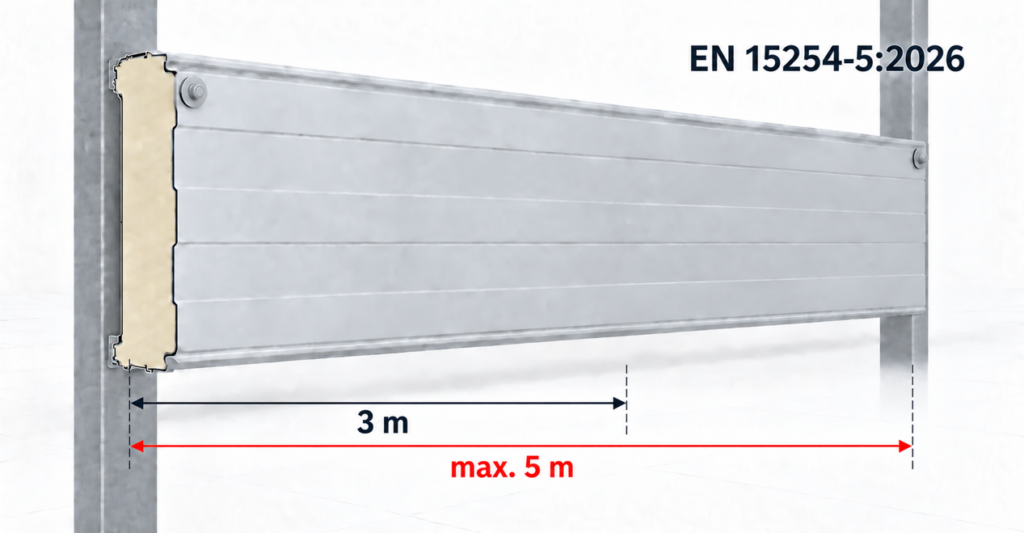
How the 2026 revision changes allowable spans for PIR sandwich panel walls

How the 2026 revision changes allowable spans for PIR sandwich panel walls Practical comparison with EN 15254-5:2018 using three worked examples Marek Gorlický  |  Head of Testing Laboratory  |  FIRES, s.r.o. Based on the enquiries and recurring questions we receive from sandwich panel manufacturers, we have prepared this article to explain the practical impact of […]
Read more
Grafika strana1 1
Blog
26. 8. 2026

Fire Resistance Classification of Fire Dampers

Each type of construction product has its own way of expressing fire performance. Through this series, we explain how to read and interpret classification codes according to the relevant European standards. Part 2 – Fire Resistance Classification of Fire Dampers Applicable standards Testing: EN 1366-2:2015 Classification: EN 13501-3:2025 Extended application of test results: EN 15882-2:2022 […]
Read more
Post14c Strana1
Blog
26. 8. 2026

Fire Resistance Classification of Single Compartment Smoke Extraction Ducts

Each type of construction product has its own way of expressing fire performance. Through this series, we explain how to read and interpret classification codes according to the relevant European standards. Part 3 – Fire Resistance Classification of Single Compartment Smoke Extraction Ducts This type of duct has a specific position within the European standardization […]
Read more
See all